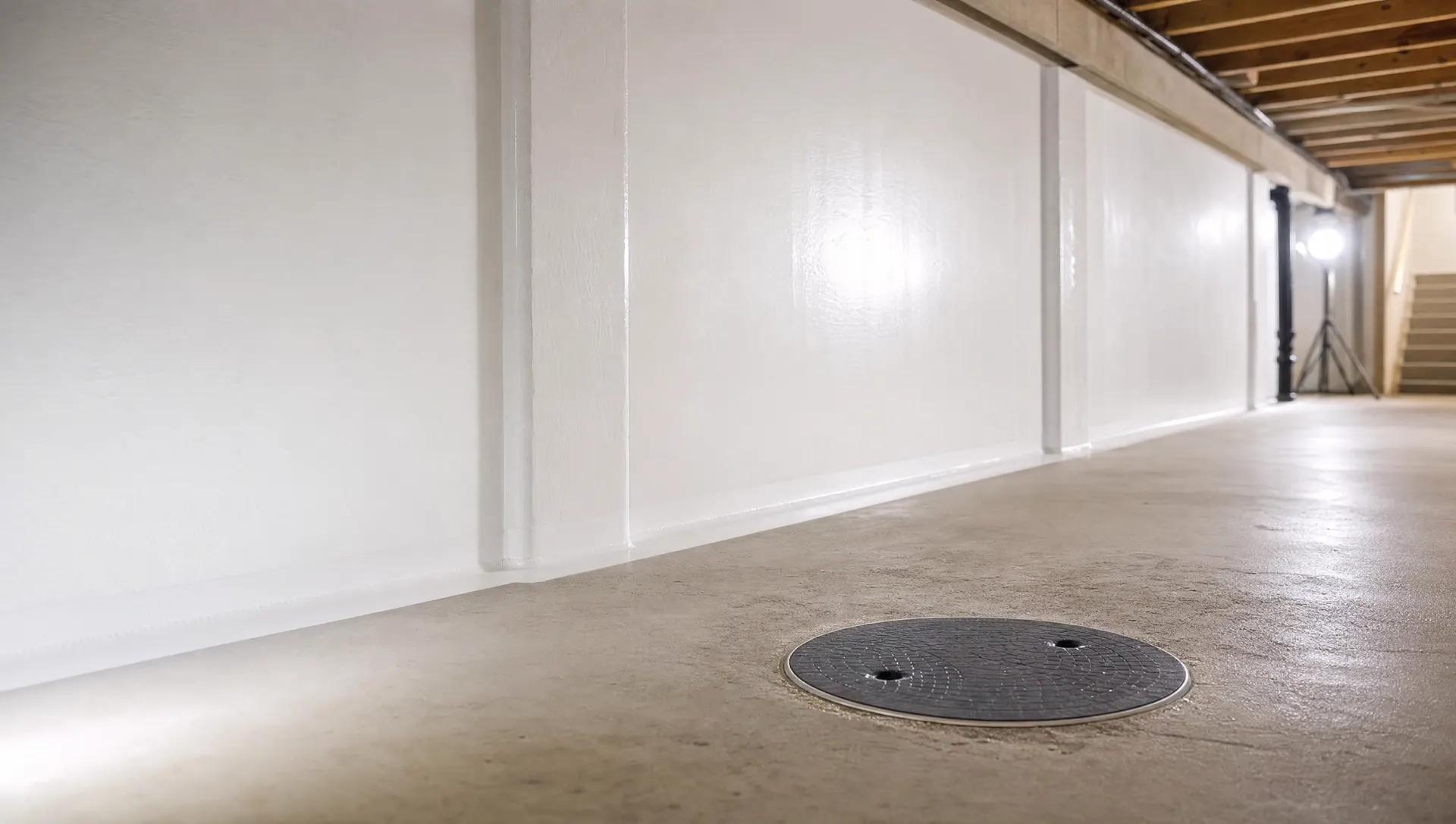
Basement Waterproofing in Joplin, Missouri
A basement does not have to be actively flooding to have a water problem. Sometimes it is a musty smell that never fully goes away. Sometimes it is a white, chalky residue creeping up the block wall, or a spot of carpet that is always a little damp no matter the season. These are all signs that water is finding its way in, even if it never shows up as standing water on the floor. Basement waterproofing in Joplin addresses that water at its source, whether the fix belongs inside the basement, outside the foundation, or both.
How Basement Waterproofing Works
There is no single fix that applies to every basement, so the work starts with figuring out how water is actually getting in. From there, a project typically draws from:
- Interior drainage systems — a channel installed along the interior perimeter of the basement floor that collects water coming through the wall or floor joint and routes it to a sump pump
- Exterior excavation and sealing — digging down along the foundation wall to apply a waterproof membrane or coating directly to the exterior surface, addressing water before it reaches the wall at all
- Crack injection — sealing active cracks in the foundation wall with an epoxy or polyurethane injection, covered in more detail on our foundation crack sealing page
- Sump pump systems — sized to the basement and the property's actual water load, detailed on our sump pump installation page
- Grading and exterior drainage — correcting slope and adding drains so water moves away from the foundation instead of toward it, covered on our exterior drainage page
Most basements end up with a combination rather than a single item off this list, because most basements take on water through more than one path at once.
Why Joplin Basements Are Harder to Keep Dry
Basement waterproofing looks different here than it does in a lot of the country, mostly because of what is under the ground. Joplin sits on old Tri-State mining district land, and the karst limestone bedrock beneath much of the area moves groundwater in ways that do not always match what the surface looks like — water can travel through fractures in the rock and old mine voids and show up against a foundation that appears, from the yard, to have no drainage problem at all. Add the heavy clay soil common across this part of Missouri, which sheds rainfall instead of absorbing it, and foundation walls here deal with real pressure during a hard Ozark-edge thunderstorm.
The age of the house matters too. Older homes in the mining-era neighborhoods near the historic core of the city often have original foundations and drain tile that were never designed for the stormwater volumes modern development sends their way. Newer homes, including many built during the rebuilding that followed the 2011 tornado, are not automatically exempt either — grading around a new build can be rushed, and a builder-installed sump system is not always sized for the property's actual water load. The right fix depends on which of these you are actually dealing with.
Signs Your Basement Needs Attention
Some signs are obvious — standing water, a sump pump running constantly, carpet you can wring out. Others are easier to miss or explain away:
- A musty smell that air fresheners never quite fix
- White, powdery mineral deposits (efflorescence) on block or poured walls
- Paint or drywall bubbling or peeling near the base of a wall
- A crack that has grown wider, or that is now damp when it was not before
- Rust on metal fixtures or a dehumidifier that runs constantly without ever catching up
Any of these is worth having looked at before it becomes a bigger job. Water problems in basements do not resolve on their own, and most get more expensive to fix the longer they run unaddressed.
What This Typically Costs
Cost depends heavily on scope. Sealing an isolated crack is typically the smallest job on this list. A partial interior drainage system covering one problem wall costs more than a crack seal but less than a full perimeter system. A full interior perimeter drainage system paired with a new sump pump sits at the larger end of interior work. Exterior excavation and waterproofing typically costs more than comparable interior work, because of the digging, backfill, and landscaping restoration involved. The way to get an actual number is a direct assessment of your basement — the gap between the smallest and largest jobs on this list is too wide for a ballpark figure to be useful.
Is basement waterproofing worth it for an unfinished basement?
Yes, arguably more so in some ways, because an unfinished basement gives direct access to see exactly where water is entering — no drywall or flooring hiding the source. Waterproofing an unfinished space also protects whatever you eventually decide to do with it, whether that is storage, a workshop, or finishing it out later.
Does basement waterproofing stop all humidity, or just standing water?
Interior drainage and sump systems are built to manage liquid water — water that is actively getting in. They do not lower the ambient humidity of the space on their own. If musty air and humidity are part of your basement's problem alongside water intrusion, a dehumidifier is typically part of the full solution, not a replacement for addressing the water itself.
Can basement waterproofing be done in winter?
Interior work can generally proceed regardless of season, because it does not depend on ground or weather conditions outside. Exterior excavation is more weather-dependent — frozen ground makes digging difficult, so exterior projects are often more practical in the milder months. If you have an active leak in winter, interior mitigation is usually still an option while exterior work waits for better conditions.
Ready for a Free Assessment?
Tell us what your basement is doing — where the water shows up, how often, and what triggers it — and we will walk through what is likely causing it and what fixing it would involve.
Need Help in Joplin Right Now?
Tell us what you need and we'll get back to you fast with a free, no-pressure quote.