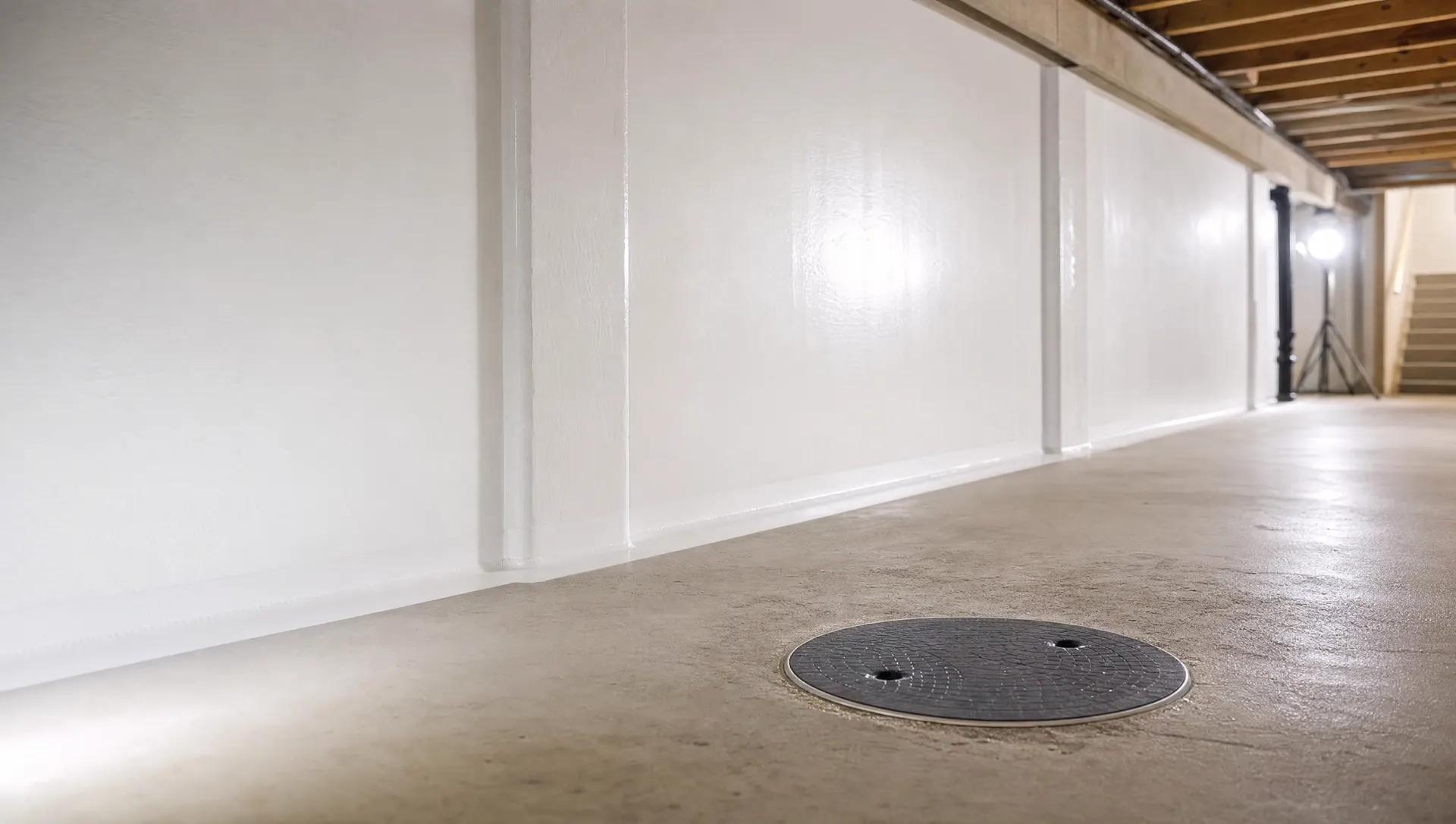
Foundation Crack Sealing in Joplin, Missouri
Not every crack in a foundation wall means something is wrong. Concrete cracks as it cures and settles, and plenty of hairline cracks are cosmetic and stay that way for the life of the house. The problem is telling those apart from the ones that are actively letting water in, or that are still moving — and in a lot of Joplin basements, those distinctions get made months after the crack first appeared, once it is already leaking during every hard rain. Foundation crack sealing addresses both: cracks that need to be watched and cracks that need to be sealed now.
How Foundation Crack Sealing Works
The method depends on the type of crack and whether it is currently leaking:
- Assessment — determining whether a crack is a settling crack, a structural crack, or somewhere in between, and whether it is currently allowing water through
- Epoxy injection — used on cracks that are not actively moving, where the goal is a structural, rigid bond that restores the wall's strength
- Polyurethane injection — used on cracks that may still move slightly or that are actively leaking, since the cured material stays flexible and expands to fill the crack as it takes on water
- Surface preparation and finishing — cleaning the crack and surrounding surface before injection, and finishing the repair so it is not an eyesore on a finished wall
- Follow-up on exterior contributors — if grading or drainage is pushing water against the wall and feeding the leak, that gets addressed too, since sealing the crack without addressing the pressure behind it is only a partial fix
Most active, leaking cracks in poured concrete foundations are good candidates for injection repair. Cracks in block (concrete masonry unit) walls, and cracks that indicate structural movement rather than simple settling, sometimes need a different approach — part of what an assessment is for.
Why Foundations Crack More in This Area
Foundation cracking has a lot to do with what the ground underneath is doing, and Joplin's ground is more active than most. Heavy clay soil expands when it is wet and contracts as it dries, and that cycle repeats every year — through a wet spring, a dry summer, another wet fall. Foundations sitting on clay absorb that movement, and over years it shows up as cracking, especially at corners and around window wells where the wall is already a weak point.
Old Tri-State mining ground adds another variable. Large areas around Joplin have underground voids and disturbed earth left over from decades of lead and zinc mining, and karst limestone bedrock is prone to slow settling and shifting on its own even without a mining history. Foundations built on or near ground with either of these characteristics can see slow settling that produces cracks a home on more stable ground would not develop. None of this means every crack is a mining- or karst-related structural issue — most are ordinary settling cracks — but it is part of why cracking shows up here more than a homeowner might expect from a house that is not actually that old.
Cracks Worth Having Looked At
Not every crack needs immediate attention, but these signs move a crack from "keep an eye on it" to "get it looked at":
- The crack is wider at one end than the other (a sign of ongoing movement rather than a one-time settling event)
- You can fit a coin or a small tool into the crack
- The crack is actively damp or leaking, even if only during hard rain
- The crack has visibly grown over a period of weeks or months
- The crack runs horizontally rather than vertically or diagonally, which can indicate pressure against the wall rather than simple settling
A vertical hairline crack that has looked the same for years is usually low priority. A horizontal crack, or one that is now leaking when it never did before, is worth having assessed sooner rather than later.
What It Typically Costs
A single crack injection repair is typically a straightforward, same-day cost, and pricing scales with the length and accessibility of the crack rather than jumping dramatically between cracks. Multiple cracks on the same job typically cost less per crack than a single isolated repair booked on its own, since setup time is shared across the visit. Cracks that turn out to need exterior excavation — because the leak is tied to a grading or drainage issue rather than the crack alone — cost more, since that adds the exterior work on top of the injection itself. We can give you an actual number once we have looked at the crack in person.
Can I seal a foundation crack myself?
Consumer crack-sealing kits exist and can sometimes slow a minor, non-leaking hairline crack, but they typically do not achieve the same bond or depth of fill as a professional injection, and they do nothing to address whatever is pushing water against the wall in the first place. For a crack that is actively leaking or growing, a surface-level DIY seal is more likely to mask the problem temporarily than solve it.
Will sealing a crack stop it from ever leaking again?
Sealing addresses the crack itself, but if the underlying cause — pressure from saturated clay soil, poor grading, a downspout dumping water right next to that section of wall — is not also addressed, a new crack can eventually form nearby under the same pressure. That is why an assessment looks at exterior contributors alongside the crack itself, not just the crack in isolation.
Is a horizontal crack always a serious problem?
Not always, but it warrants a closer look sooner than a vertical crack would. Horizontal cracking can indicate that soil or water pressure is pushing against the wall from outside, which is a different situation than a wall simply settling. It does not automatically mean structural failure, but it is the type of crack worth having assessed rather than watched from a distance.
Get That Crack Looked At
Tell us where the crack is, how it is behaving, and whether it is leaking, and we will walk through what sealing it — and addressing whatever is behind it — would involve.
Need Help in Joplin Right Now?
Tell us what you need and we'll get back to you fast with a free, no-pressure quote.